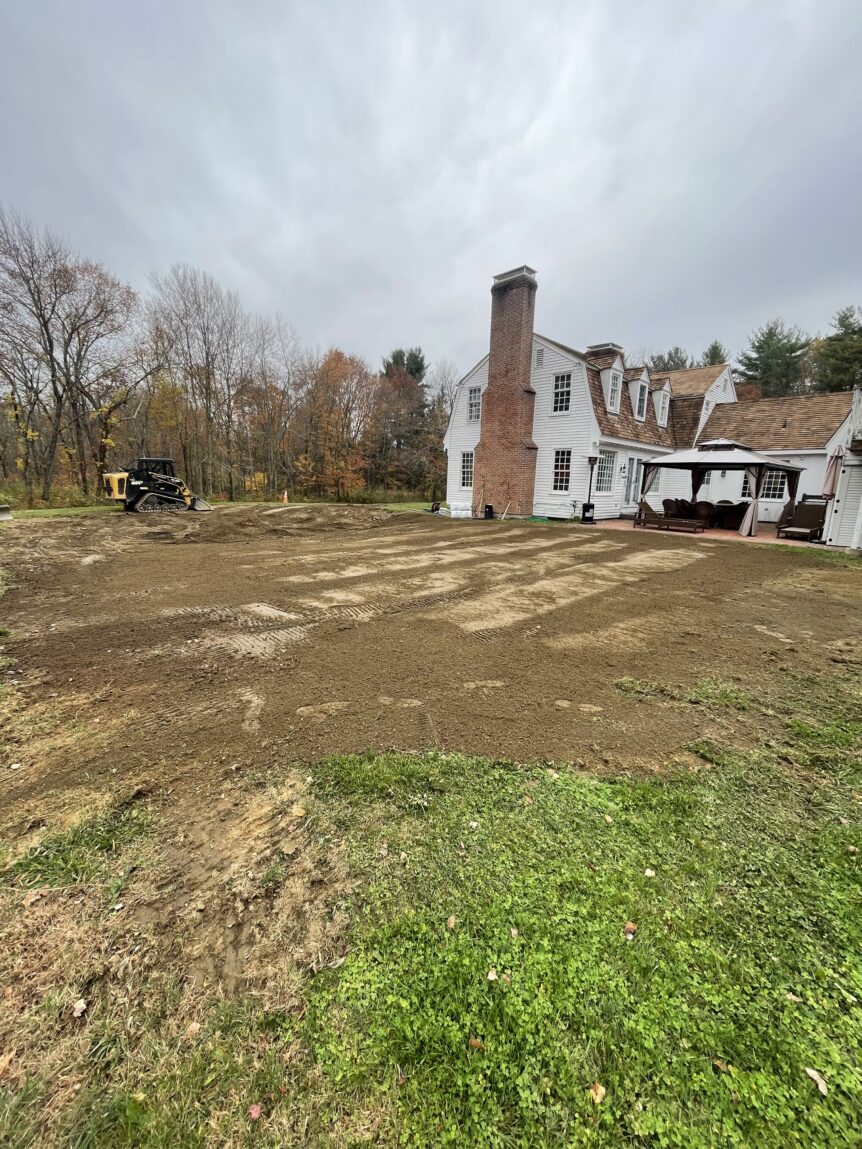
First: “Sinkholes” After a Fill-In Usually Aren’t True Sinkholes
Most homeowners use “sinkhole” to describe a low spot or collapse where the pool used to be. In pool fill-ins, that almost always comes from: improper backfill, poor compaction, buried debris, or water movement. If those four are handled correctly, the risk drops dramatically.
The 7 Real Reasons Pool Fill-Ins Settle (and How Cheap Jobs Fail)
1) Filling the pool like it’s a hole in the woods
A pool is a structure, not a simple excavation. If it’s not opened up for drainage and treated correctly, water can get trapped, material can migrate, and the fill can soften over time.
2) Buried “junk” (liners, fiberglass, wood, rebar piles, trash)
Debris creates voids, decomposes, and shifts. It also causes inspection and long-term property headaches. For certain pool types, this is exactly why some “partial” approaches aren’t appropriate. If you want to understand pool-type differences, start here: Types of Pools We Remove.
3) No compaction (or “bucket compaction”)
Dumping fill and “packing it” with the excavator bucket is not real compaction. Proper compaction is done in lifts (layers), with the right materials and the right equipment.
4) Using the wrong backfill material
“Clean fill” can mean a lot of things. Some materials compact well. Some don’t. Some hold water. Some drain. The wrong material increases settling risk.
5) Bad drainage planning
Water is undefeated. If surface water or groundwater is directed into the fill zone, it can soften soils and wash fines out of the backfill, creating voids.
6) Rushing the finish (perfect lawn today, problems tomorrow)
A “perfect” finish in one day can hide shortcuts underneath. A better plan is often: proper fill + compaction + grade, then final lawn steps at the right time.
7) Not accounting for frost and seasonal movement (CT reality)
Connecticut’s freeze–thaw cycles are real. The answer isn’t “don’t do fill-ins” — it’s building the fill correctly so it performs through seasons.
Quick Comparison: “Cheap Fill-In” vs. A Fill-In Built to Last
| Category | Shortcut That Fails | What You Actually Want |
|---|---|---|
| Pool Structure | Buried debris, trapped water | Correct demo + drainage strategy based on pool type |
| Backfill Material | “Whatever fill we can get cheap” | Material that compacts + drains properly for the site |
| Compaction | Dump it all, pack with excavator bucket | Lift compaction (layer-by-layer) with the right equipment |
| Drainage | Ignore water flow and grade | Grade designed to move water away from the fill zone |
| Finish | Make it look good today, hope for the best | Finish plan that matches season + soil conditions (seed/sod timing) |
Mobile tip: swipe the table left/right to view the full comparison.
What a Proper Pool Fill-In Should Include
- Pool-type-appropriate demolition (not a one-size-fits-all approach)
- Debris handled correctly (no buried trash that becomes tomorrow’s problem)
- Drainage strategy so water doesn’t get trapped in the old pool footprint
- Backfill material selection that compacts well and fits the property conditions
- Compaction in lifts (layer-by-layer), not “dump and pray”
- Final grading that moves water away from the area
- Topsoil + finish plan (seed/sod timing based on season)
Want to see real pool removal examples? Partial removal example and Full removal example.
Questions to Ask Any Contractor (This Filters Out the “Cheap Failures”)
- What exactly is being removed, and what’s being left? (Get it in writing.)
- How are you handling debris? (If the answer is vague, that’s a red flag.)
- What backfill material are you using? (Not “clean fill” — ask what it is.)
- How do you compact? (Layer-by-layer or dump-and-pack?)
- How are you addressing drainage? (Where does water go after the job?)
- What’s the plan for final grade + lawn? (Same day or staged?)
- Can you show completed examples? (Not just “before/after” — ask about results months later.)
Why the “Cheapest Fill-In” Can Be the Most Expensive
If a fill-in settles, you pay twice: re-grading, adding material, fixing drainage, re-seeding/re-sodding, and sometimes re-opening the area to correct what was buried. That’s why a low bid with fuzzy details should make you nervous.
For concrete pools especially, costs can swing based on disposal, trucking, labor, and what’s built around the pool. If you’re budgeting, this breakdown helps: Concrete pool removal cost drivers in CT .
FAQs: Settling, Compaction, and “Sinkholes” After Fill-Ins
How long does it take for a filled-in pool area to “settle”?
Is it better to do a fill-in before or after spring rain season?
Can I put a shed/patio on a filled-in pool area?
What’s the fastest way to get a ballpark price?
Serving Connecticut Homeowners
We handle pool removal and fill-ins across Connecticut. If you’re in New Haven County, start here: New Haven County pool removal . Or browse all coverage areas here: Service Areas .
Want a Fill-In That Doesn’t Turn Into a Future Problem?
If you’re comparing quotes, don’t just compare price — compare the plan. The difference between “looks good today” and “still solid years from now” is all in the details: materials, lift compaction, drainage, and not burying what shouldn’t be buried.