Types Of Pools
This page breaks down the most common types of swimming pools we see in the Northeast and what each type typically means for pool removal, pool demolition, or a clean fill-in. The individual pages for each pool type go deeper—this is the quick “what do I have?” guide.
Choose Your Pool Type
Not sure where to start? Pick the pool type that matches your backyard. Each page goes deeper on the build, removal options, and what affects cost and timeline.
Concrete / Gunite Pools
Hard-shell pools (gunite/shotcrete/poured). Demolition and material handling matter most here.
Read Concrete / Gunite GuideVinyl Liner Pools
Wall panels with a vinyl liner. Debris handling + fill/compaction is where “good vs bad” shows up later.
Read Vinyl Liner GuideFiberglass Pools
Pre-made shell set into an excavation. Removal plan depends heavily on access (lift vs section).
Read Fiberglass GuideAbove Ground Pools
Disassembly + haul-away. Yard restoration (grading/topsoil) is the difference-maker if you want grass to grow back.
Read Above Ground GuideProof: What “Finished” Actually Looks Like
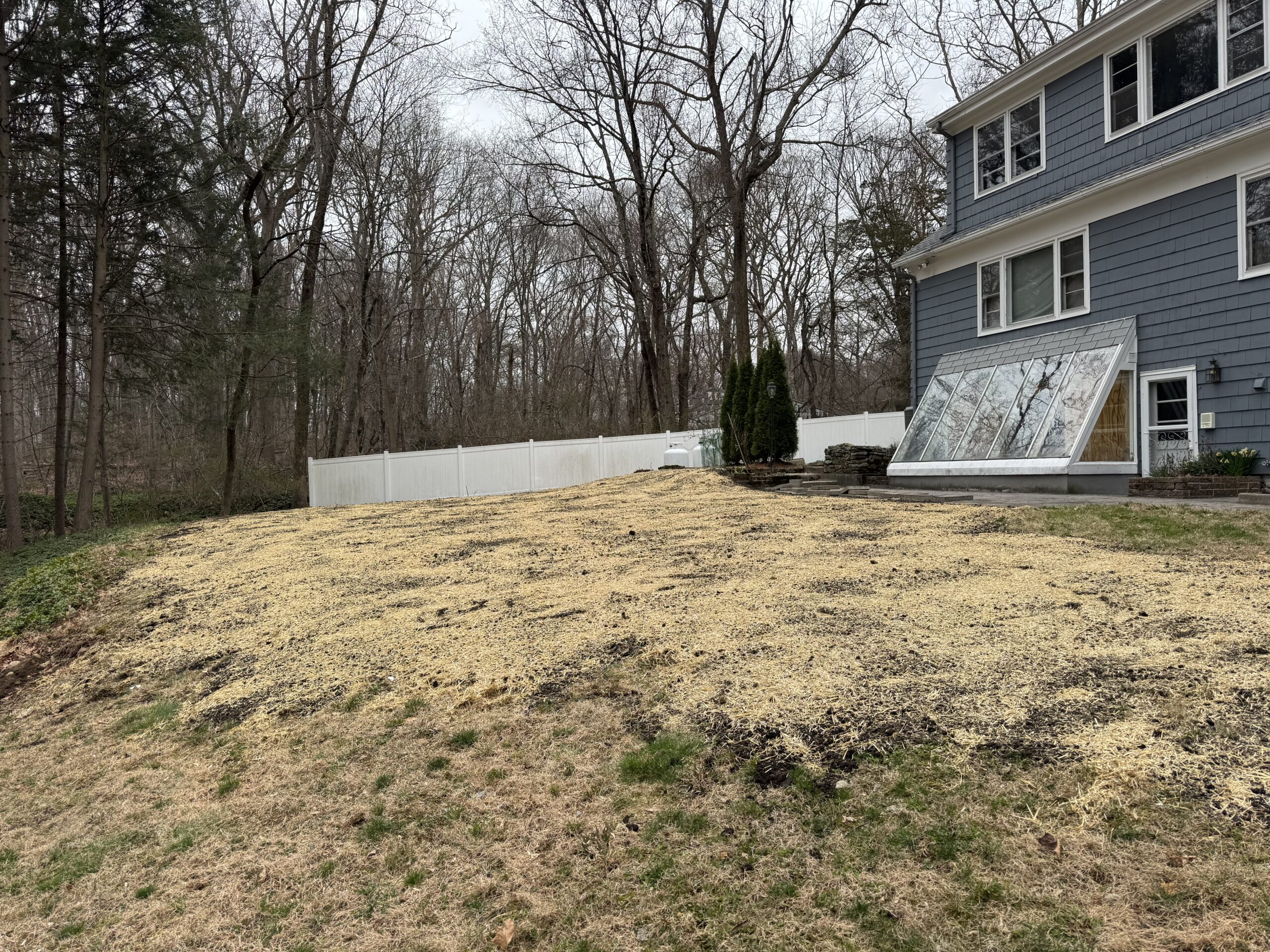
A removal isn’t “done” when the pool disappears. It’s done when the area is filled, graded for drainage, and yard-ready. Here’s the kind of finish we aim for.
Why Pool Type Matters
Pool type affects:
- Demolition method (breaker vs cutting vs disassembly)
- Debris volume (concrete/rebar vs panels/liner)
- Cost & timeline (access + material handling are big drivers)
- Fill strategy and grading (how we reduce settling and improve drainage)
- What towns allow (requirements can vary by municipality)
How to Identify What Type of Pool You Have
Fast clues:
Look at the walls
Vinyl liner: liner at the waterline + liner track/coping. Concrete/gunite: hard surface (plaster/pebble) often with waterline tile. Fiberglass: smooth gel-coat shell.
Look at the steps
Fiberglass often has molded steps/benches that look like part of the shell. Vinyl pools may have an insert or liner-covered steps. Concrete steps are built-in and finished in plaster.
Look outside the pool
Heavy concrete decks/coping often point to concrete/gunite. Above ground pools are easiest: visible wall structure above grade.
Helpful photos: (1) wide shot of pool + decking, (2) access route street → backyard, (3) anything tight: gates, walls, slopes, septic.
What’s NOT a “Pool Type” (Common Confusion)
People often search these terms thinking they describe the pool structure. They don’t — but we can still remove the pool either way.
- Saltwater pool = a sanitation system (can be concrete, vinyl, or fiberglass).
- Chlorine pool = also sanitation (not a structure type).
- In-ground pool = describes placement, not the construction material.
- Heated pool = equipment, not structure.
Pool Type Comparison
High-level comparison (each type has its own detailed page):
| Pool Type | How it’s built | Best for | Removal considerations |
|---|---|---|---|
| Concrete / Gunite | Hard shell (gunite/shotcrete or poured), often rebar + heavy decks. | Full backyard reset; strong long-term solution for unused aging pools. | Most material to process; equipment matters; grading + compaction are key. |
| Vinyl Liner | Wall panels + base with vinyl liner; coping locks liner in. | Homeowners who want lawn/landscaping and a clean finish without the upkeep. | Different debris profile; synthetics/panels require correct handling; fill/compaction still matters. |
| Fiberglass | One-piece shell set into excavation, surrounded by backfill. | Faster removals when access is good; clean yard restoration after. | Plan depends on access; shell may be lifted or sectioned; restoration still matters. |
| Above Ground | Steel/resin wall system with liner; sits above grade. | Quick removals; often paired with base restoration for lawn use. | Often fastest; can include deck removal; yard restoration still matters. |
| Hybrid / Mixed | Combination of materials (block, partial above-grade, heavy retaining). | Older properties, slope builds, or “built-in” installations. | Careful scoping; access + tied-in hardscape can drive cost/time. |
Concrete / Gunite Pools
Gunite / Shotcrete
Sprayed concrete shell with reinforcement. Thickness can vary widely.
Learn morePoured Concrete
Dense, often rebar-heavy builds. Access and material handling drive scope.
Learn moreTwo common paths
Managed fill-in vs full haul-out depends on town rules and your future plans.
Learn moreVinyl Liner Pools
Liner + track
Vinyl at the waterline and a liner track/coping near the top edge.
Learn moreDebris mix is different
Less concrete demo, but synthetic materials must be handled properly.
Learn moreLawn-ready surface
Stable fill + drainage-aware grading is what makes it look “done.”
Learn moreFiberglass Pools
Access matters
Plan depends on access and site conditions; shell may be sectioned.
Learn moreStill a fill & grade job
Even clean shell removal requires proper fill, compaction, and grading.
Learn moreAbove Ground Pools
Visible wall above grade
Steel/resin walls with a liner; often paired with deck/stairs.
Learn moreClean yard reset
We aim to leave the surface blended into the existing grade.
Learn moreOther / Specialty Pool Types
Most pools fit the four main categories above. But we also see specialty installations that require extra planning. If your pool doesn’t fit neatly into a category, photos usually solve it fast.
Hybrid / Mixed Construction
Block walls, partial above-grade builds, or heavy retaining/hardscape ties.
Semi-Inground Pools
Above ground pools that are partially buried or built into a hillside. These often involve extra excavation and restoration work.
Pool + Hardscape Removal
Many removals include patios, walkways, retaining walls, fencing, sheds, or decks. If you want these removed too, it should be scoped clearly.
Stainless / Specialty Builds
Custom shells/materials—requires a site-specific plan.
Spas / Plunge Pools
Standalone or integrated into patios and hardscape.
FAQ: Pool Types & Removal
Is “gunite” the same as “concrete”?
In homeowner terms, yes—gunite/shotcrete are concrete construction methods (sprayed concrete shells). See Concrete Pool Removal.
Which pool type is usually the most expensive to remove?
Concrete/gunite often involves the most material handling, but access and hardscape volume can change everything.
What matters more than pool type?
Access, surrounding decks/walls, drainage/slope conditions, and town requirements often drive scope more than the pool type itself. If you want proof and real examples, start here: Completed Projects.
More answers here: Pool Removal FAQ’s.
Get a Free Quote
If you want a clean removal plan that matches your pool type and your end goal (lawn, landscaping, patio, or future build), reach out and we’ll give you a straight answer.