Completed Project · Guilford, CT
A pool removal is not finished when the pool is gone. The goal is to give the homeowner their yard back. For this Guilford, Connecticut project, we removed the pool, filled it in, and finished the entire disturbed area with topsoil, grass seed and hay — not just the footprint of the old pool.
We pulled the permit and drained the pool before the removal work. The job itself was completed in two days. That is the on-site project timeline, not a promise that permitting and every future job can be completed in two days.
Project at a glance
- Location: Guilford, CT
- Preparation: Permit pulled and pool drained
- Scope: Pool removal and fill-in
- Finish: Topsoil, grass seed and hay over the entire disturbed area
- On-site duration: Two days
1. Pull the permit before the work begins
We started by pulling the permit for this Guilford pool removal. Permitting is part of planning the job properly; it is not something to sort out after demolition has started. Requirements can vary by town and project, so the scope needs to be established before equipment goes to work.
2. Drain the pool
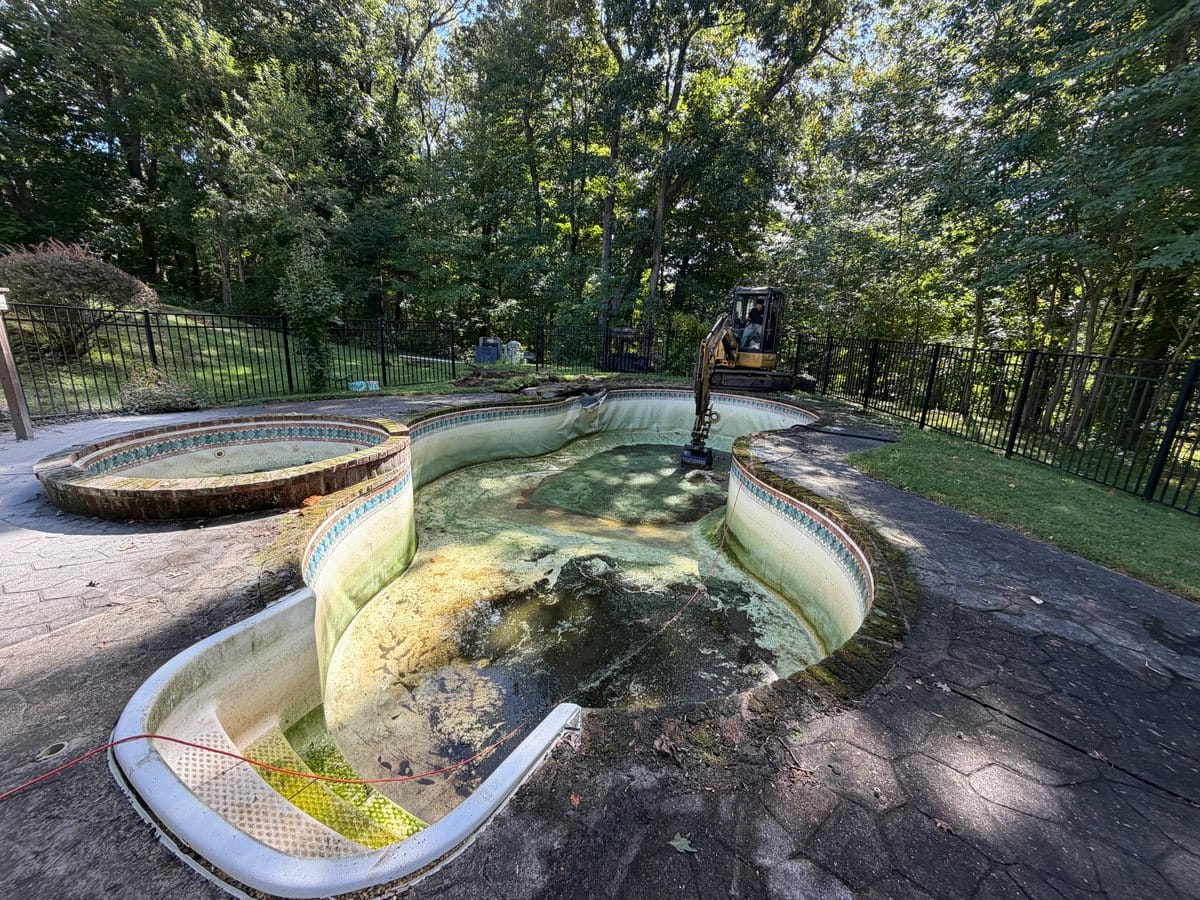
Next, we drained the pool in preparation for removal. The project photo above shows the drained pool and our excavator ready for the demolition stage. This is the starting point of the transformation — the finished lawn is still ahead.
3. Remove the pool
With the preparation complete, we moved into the removal work. The clips below show the excavator working through the pool demolition and the pool being taken apart. These are actual videos from this Guilford job, not stock footage.
Pool removal is specialized work. It takes more than equipment and an empty hole: the demolition, fill-in and yard finish need to be planned together. As pool removal experts, our focus is the complete project, from the first stage of preparation through the ground the homeowner is left with.
4. Fill in the former pool area
After removing the pool, we filled in the former pool area to turn that space back into part of the yard. This is a separate, important stage of the job — demolition alone does not leave a usable lawn area.
Proper backfill, compaction and drainage planning matter on pool fill-ins. Surface topsoil is the growing layer for the lawn, not a substitute for a properly prepared area beneath it. For more about why that preparation matters, read our guide to avoiding sinkholes and settling after a pool fill-in.
5. Finish the entire disturbed area — not just the pool footprint
For this project, we finished all of the disturbed ground with topsoil, grass seed and hay. That distinction matters: a pool removal affects more than the space inside the old pool walls. The finishing work should address the area disturbed by the job so it can grow back into lawn together.
- Topsoil: Provides the surface growing layer for the new grass.
- Grass seed: Starts the new lawn across the prepared area.
- Hay: Helps protect the seeded surface and retain moisture during establishment.
The removal, fill-in and finishing work on this Guilford job was completed in two days. The construction was finished; the grass still needed time to germinate and grow. A seeded finish is not an instant mature lawn, and its success depends on follow-through with watering and care.
Why fall is the best time for a new lawn after pool removal
For the cool-season grasses commonly grown in Connecticut, late summer into early fall is generally the best seeding window. It is an especially good time to pair a pool removal with a topsoil-and-seed finish: the yard is prepared while conditions favor germination and early growth.
- Soil is still warm. Warm soil helps grass seed germinate even as daytime temperatures become more comfortable.
- Cooler air means less heat stress. New seedlings face less of the intense summer heat, and moisture generally evaporates more slowly.
- There is less competition from many summer annual weeds. New grass has a better opportunity to establish than during peak summer weed growth.
- Roots get a growing period before winter. Seeding early enough gives the lawn time to develop before cold weather slows growth.
Fall is a favorable window, not a guarantee. Seed type, weather, shade and watering all affect the result. Schedule early enough for the chosen grass to establish before hard frosts, keep the seedbed consistently moist without washing seed away, and limit foot traffic while the new lawn is getting started. Hay helps protect the surface, but it does not replace watering.
Considering a different lawn finish? Our sod vs. seed comparison explains the tradeoffs. This Guilford homeowner’s yard was finished with seed and hay.
Pool removal experts serving Guilford and Connecticut
This job shows the full scope of a pool removal: permitting and draining first, then removal and fill-in, followed by restoration of the entire disturbed area. At Grillo Pool Removal, we focus on pool removal as a specialty — not just the demolition stage.
See more of our completed pool removal projects, or explore our Connecticut pool removal cost guide before planning your own project. Access, pool construction and the amount of restoration needed can all change the scope and schedule.
Ready to replace your pool with yard space?
Send your town/address, a wide photo of the pool and a photo of the access route from the street to the backyard. We can discuss the removal, fill-in and lawn finish as one project.
Call: (203) 806-4086 | Text: (203) 572-3992
We use a call blocker. If you call from an unknown or blocked number, your call may not get through — text first for the fastest response.